Military & Veterans
Military vs. Civilian Home Buyers: What's Different in 2026?
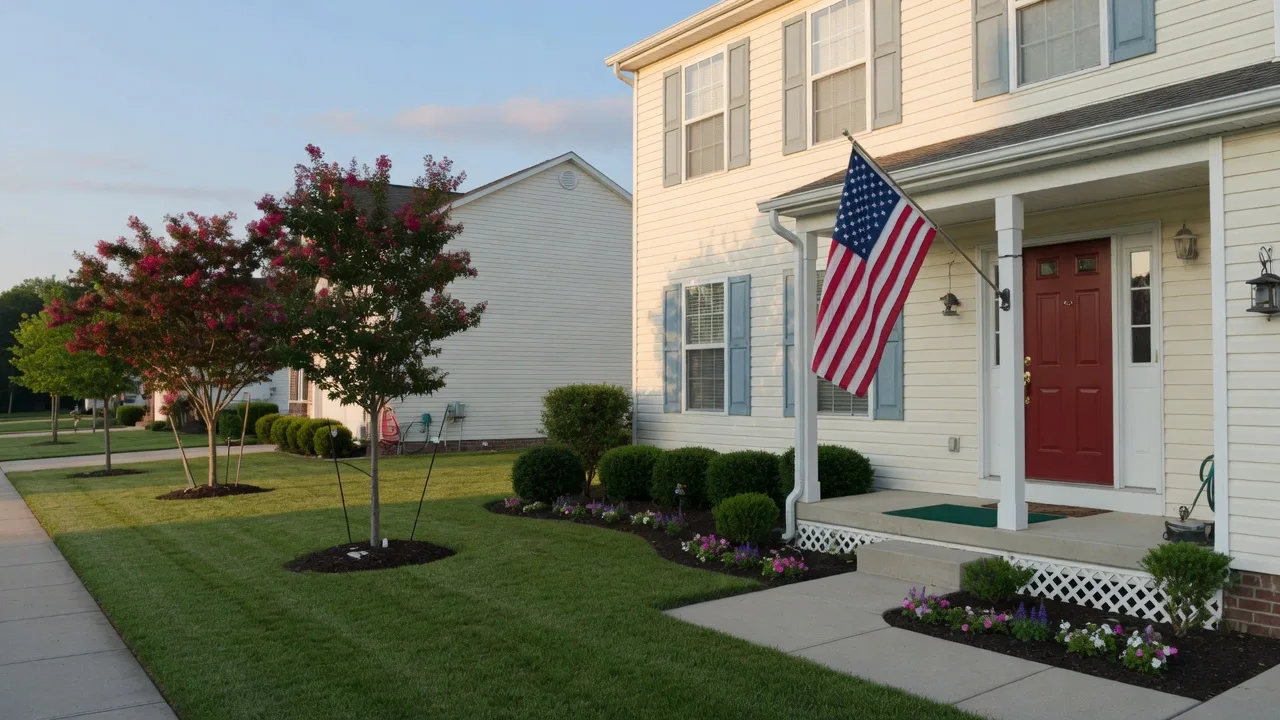
As a Marine Corps Veteran and a real estate agent who has worked with military families for 24 years, I can tell you the buying experience in Hampton Roads is genuinely different depending on which side of the uniform you are on. Service members get powerful advantages, and they carry real constraints. Here is how a military home buyer Hampton Roads sees every day compares with a civilian buyer in 2026.
The Loan Itself: VA vs. Conventional
The biggest difference is the financing. A VA loan Hampton Roads service members use offers zero down payment and no monthly mortgage insurance, which civilians with conventional loans cannot get without private mortgage insurance. The trade-off is a one-time VA funding fee: 2.15% for first-time use with less than 5% down, dropping to 1.25% with 10% or more down, and 3.3% for subsequent use with less than 5% down. Veterans with a service-connected disability are exempt from the fee entirely.
BAH Counts as Income, and It Is Grossed Up
Basic Allowance for Housing changes the affordability math. Lenders count BAH as qualifying income on VA loans, and because it is tax-free, most lenders gross it up by about 25%. If your BAH is $2,500 a month, a lender may count it as roughly $3,125 when calculating your debt-to-income ratio. That is buying power a civilian with the same taxable salary does not have. You can see exactly how it works in our BAH and home buying guide.
SCRA Protections Civilians Do Not Have
The Servicemembers Civil Relief Act gives military homeowners protections civilians simply do not have. Interest on debts incurred before active duty, including a mortgage, is capped at 6% during service, and for mortgages that cap extends one year after leaving active duty. SCRA also restricts foreclosure without a court order during and shortly after service, and lets service members break a housing lease if they receive PCS or deployment orders. Knowing these protections changes how military families plan a home purchase.
PCS Orders Drive the Timeline
Civilians buy when they are ready. Military buyers buy when orders say so. A PCS move typically gives 60 to 90 days to report, which means the whole search, offer, and closing has to fit a compressed window, and the VA loan requires an intent to occupy, usually within 60 days of closing. That is why starting the pre-approval and the search early matters so much for military relocation buyers. Our step-by-step VA loan guide walks service members through the whole process.
Timing also forces hard decisions civilians rarely face: whether to buy near the base you are leaving for the one you are going to, and whether buying makes sense when a tour may only last three years. The rule of thumb I give my clients is that buying usually pays off if you will stay at least three to five years. A civilian with a stable job can be more flexible, but they also miss the zero-down advantage and the SCRA safety net.
If you are a service member or veteran searching Virginia Beach neighborhoods near a base, or a civilian comparing the Chesapeake neighborhoods, I have helped both thousands of times. The military home buying page lays out the advantages, and I will tell you honestly which local neighborhoods fit your timeline and your budget.
PCS Orders or Not, I've Got You
A veteran agent who has closed hundreds of VA loans and hundreds of civilian deals. Tell me your timeline and I will map the path.
Talk to Terry