Hampton Roads · 2026 City Guide
Living in Chesapeake, VA (2026 Guide)
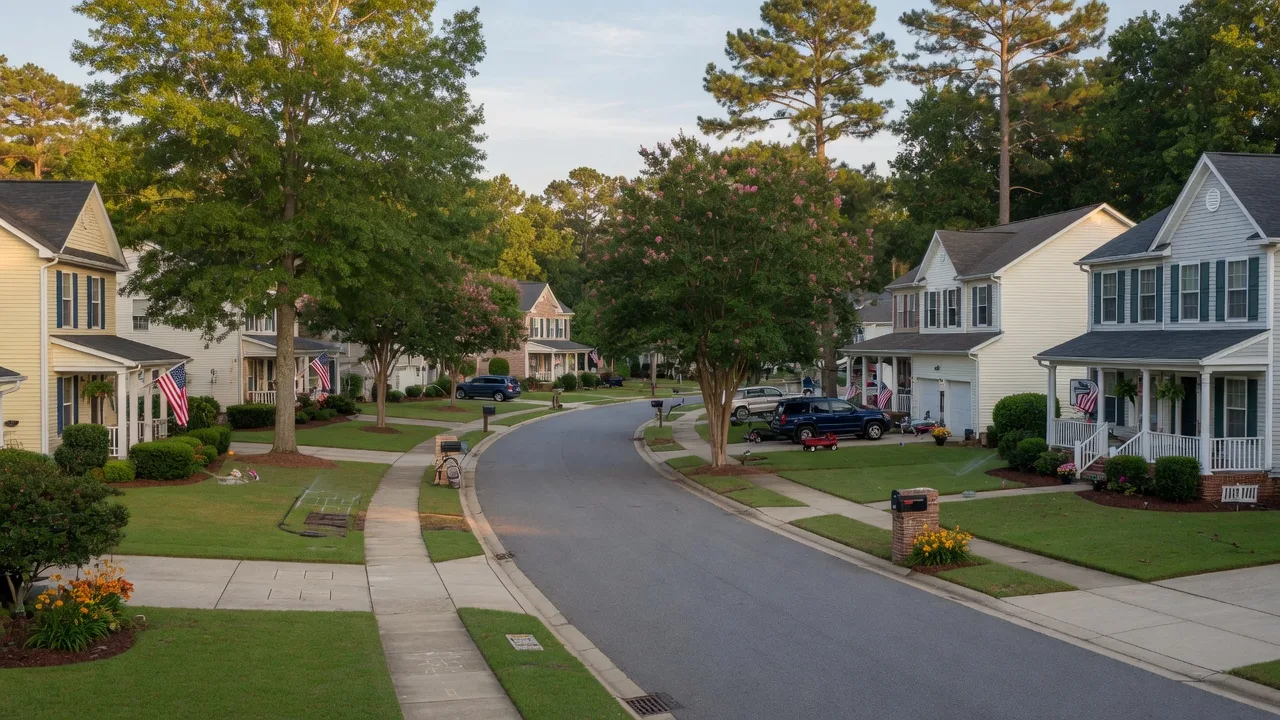
Chesapeake is Virginia's second-most-populous city and the landmass player of Hampton Roads: huge lots, open space, top-rated schools, and more new construction than any other city in the region. It is the answer for buyers who want the beach region's schools and commute reach without the beach price tag. I am a licensed Virginia broker, a Marine Corps Veteran, and a Hampton Roads native with 24+ years and 1,000+ transactions, and this guide is built on current market data and first-hand local knowledge, reviewed October 2026.
What Buyers Should Know Before Moving to Chesapeake
The straight talk I give every buyer before we start touring. No hype, just what actually matters in this city.
- Housing type: this is where Hampton Roads' new construction happens. Builders are active in Grassfield, Hickory, Western Branch, and along the Great Bridge corridor, often on larger lots than Virginia Beach offers.
- Price reality: the median runs $418K to $435K, close to Virginia Beach's, but you get more square footage and more land per dollar at almost every price point.
- Commute reality: roughly equal reach to Virginia Beach, Norfolk, and the bases in between. The beach is a 30 to 40 minute drive each way, so live here for the space, not the sand.
- Lifestyle: it is a car suburb, full stop. Greenbrier is the commercial heart, and the night out usually means driving to Norfolk or Virginia Beach.
- What surprises newcomers: school zones drive values hard here. The wrong side of a boundary can change a home's appeal significantly, so verify the zone before you offer.
Chesapeake at a Glance (2026 Buyer Snapshot)
The quick picture for buyers, as of late 2026. Sources: Redfin market data and local Hampton Roads market reports.
Median Home Price
$418K–$435K
Redfin reports ~$435K (Aug 2026); a region report puts new-construction-weighted medians near $455K.
Days on Market
~26–32 days
A healthy, competitive market; new builds and great school zones move fastest.
New Construction
Region's Leader
Active communities across Grassfield, Hickory, Western Branch, and the Great Bridge corridor.
Growth Stage
Fast-Growing Suburb
Scenic Heights (885 units), the HRBT opening around spring 2027, and road upgrades along the Edinburgh corridor.
Population & Demographics
Figures from the U.S. Census Bureau (2020 Census count and recent American Community Survey estimates). They shift a little year to year, so treat them as approximate.
~255K
Population (249,422 in 2020 Census; ~255,300 est. 2025)
Independent City
County-equivalent city in Virginia
Hampton Roads
South Hampton Roads region
~$95K
Median household income (Census ACS)
~38
Median age (years)
Source: U.S. Census Bureau QuickFacts and American Community Survey 5-year estimates. See the full source list at the bottom of this guide.
Housing Guide
What the housing stock actually looks like, and what it costs at each rung.
New Construction vs. Resale
Chesapeake is where Hampton Roads' new construction happens. Builders are selling in Grassfield, Hickory, Western Branch, and along the Great Bridge corridor, often on larger lots than Virginia Beach offers. Resale stock is mostly 1980s to 2000s homes with solid bones, plus classic brick homes in Great Bridge and Deep Creek. Buyers who want move-in-ready without renovating tend to land on new builds here.
Types of Homes You'll Find
Ranch and colonial single-family homes dominate, along with townhome communities near Greenbrier and the interstates. Waterfront homes run along the Elizabeth River, the Intracoastal Waterway, Deep Creek, and the many inlets in southern Chesapeake. Lot sizes are the headline: half-acre to multi-acre lots are common outside the city's commercial corridors.
Approximate Price Spectrum by Home Type (2026)
| Home Type | Typical Price Range |
|---|---|
| Townhouse | $300K–$450K |
| Resale single-family | $350K–$500K |
| New construction | $400K–$600K |
| Waterfront / estate | $600K–$1.2M+ |
Ranges are approximate, based on recent sold data and current listings; verify against live listings when you search.
Honest Pros and Cons of Living in Chesapeake (2026)
No place is perfect. Here is the balanced version a local agent gives clients before they fall in love with a house.
The Pros
- More house and more lot for the money than Virginia Beach, across almost every price point.
- Top-rated schools: Great Bridge, Grassfield, and Hickory zones are consistently among the most requested in the region.
- The region's strongest new-construction pipeline, if a brand-new home is the goal.
- A competitive real estate tax rate, around $1.01 per $100 assessed (FY 2027).
- A central location: roughly equal reach to Virginia Beach, Norfolk, and the bases in between.
The Cons
- Few true walkable, urban areas. Greenbrier is the commercial heart, but Chesapeake is a car suburb, full stop.
- School zones drive values hard here; the wrong side of a boundary can change a home's appeal significantly.
- Beach trips are 25 to 40 minutes each way. Live here for the space, not the sand.
- Rapid growth means construction traffic and road projects on corridors like Holland Road and Battlefield Boulevard.
- Limited dining and nightlife depth compared to Norfolk and Virginia Beach; you will drive for the night out.
Chesapeake Neighborhoods: Finding Your Right Fit
The six areas I send most buyers to, with approximate price ranges from current market data. Ranges move with the market, so verify against live listings.
1 Great Bridge
Approx. $425K–$560KThe crown jewel: historic charm, top-rated Great Bridge schools, and a strong community feel around Battlefield Boulevard. What to know: the most competitive family zone in the city.
2 Western Branch
Approx. $325K–$450KA large, established area with good schools and the biggest range of price points. What to know: a value play for first-time buyers and families who need Norfolk access.
3 Hickory
Approx. $475K–$550K+Southern Chesapeake's newer construction, with larger lots and newer schools. What to know: the fastest-appreciating family corridor; expect country-close, not country-quiet.
4 Grassfield
Approx. $390K–$650KOne of the region's top school zones, with new builds and resale side by side. What to know: families pay a premium for the Grassfield attendance zone, and it holds value.
5 Greenbrier
Approx. $350K–$475KThe commercial and retail core of Chesapeake, with townhouses and older single-family homes. What to know: unbeatable shopping access and easy interstate reach.
6 Deep Creek
Approx. $400K–$442KWaterfront-laced neighborhoods along the namesake creek with good schools and relaxed living. What to know: quiet streets and boat access at a price point that surprises people.
Neighborhood price ranges are approximate, drawn from Redfin neighborhood market data, Zillow home values, and local market reports (2025–2026). School assignments vary by address; verify a specific property's zone before you offer. My Chesapeake family neighborhoods post goes deeper.
Schools
Chesapeake Public Schools serves the city. School assignments are zone-based and strongly influence home values, so confirm a specific address's school via the division's boundary look-up before you offer.
Academies & Specialty Programs
- Governor's STEM Academy at Grassfield High, with career pathways in engineering, programming, and global entrepreneurship and technology.
- Advanced Placement, dual enrollment, and career and technical education pathways are offered district-wide at every high school.
- The Chesapeake Career Center serves career and technical education students across the city.
Compared to Virginia Beach, Chesapeake leans on strong traditional neighborhood schools rather than a large district-wide magnet system, which keeps the focus on the address you buy.
The Buyer's Take
Great Bridge, Grassfield, and Hickory zones are the value drivers in this market, and new construction follows them. Run every candidate address through the Chesapeake Public Schools boundary look-up before you offer. My Hampton Roads school district guide and the full schools guide compare the divisions.
Commute Times
Driving times depend heavily on your exact neighborhood, the time of day, and tunnel traffic. Use these as planning ranges, not promises.
To Norfolk (downtown)
Approximately 25–35 minutes via I-464 or I-64, corridor dependent.
To Naval Station Norfolk
Approximately 30–40 minutes, longer in morning rush.
To Virginia Beach (Oceanfront)
Approximately 30–40 minutes; southern Chesapeake to Red Mill is closer to 20–30.
To the Peninsula (Langley AFB / shipyard)
Approximately 40–55 minutes via the HRBT, heavily rush-hour dependent.
Cost of Living
BestPlaces puts Chesapeake at a cost-of-living index of 103.5, about 3.5% above the U.S. average of 100 and slightly below the Virginia state average (around 104.2).
What That Means
Housing is the biggest factor. Chesapeake's median price is close to Virginia Beach's, but buyers typically get more square footage and more land per dollar, which changes the real feel of the comparison. Groceries, utilities, and services track close to national norms.
Different indexes use different methods, so read any single number as a directional signal. Your real comparison comes down to the specific house and its property tax bill, and Chesapeake's tax rate is competitive for the region.
The Trade-Off
You trade the beach and a big-city amenity base for space, schools, and newer homes. For families who prioritize school zones and elbow room, that is often the winning trade.
I help buyers run this exact comparison every week. If you are weighing Chesapeake against Virginia Beach, my side-by-side guide walks through every factor with current numbers.
People Also Ask: Chesapeake
The questions buyers actually Google before they call, answered straight.
Is Chesapeake a good place to live?
What is the crime rate like in Chesapeake?
Is Chesapeake good for families, military, and retirees?
What is the commute to Norfolk and the bases like?
What are the best neighborhoods in Chesapeake?
How much house can I get for the median price in Chesapeake?
Is Chesapeake a buyer's or seller's market in 2026?
Want the fuller picture? Read the housing guide, neighborhood breakdown, and commute details above, or just call and ask.
How Chesapeake Compares to Other Hampton Roads Cities
Chesapeake is the landmass and new-construction player of Hampton Roads, with a median around $418K to $435K that sits close to Virginia Beach's while buying you more square footage and more land. It is a car suburb built around top school zones, with a central location that reaches Virginia Beach, Norfolk, and the bases in between.
If you want a brand-new home on a bigger lot with strong schools, Chesapeake is usually the answer. If you want the beach, urban walkability, or a lower entry price, Virginia Beach, Norfolk, and Portsmouth each offer a different trade.
The Compare List
- Price: a median close to Virginia Beach's, but more house and more lot per dollar.
- Pace: a healthy, competitive market at about 26 to 32 days on market.
- Commute: roughly equal reach to Virginia Beach, Norfolk, and the bases; the beach is a 30 to 40 minute drive.
- Lifestyle: the top family suburb, with a car-dependent layout and limited nightlife depth.
Compare the Other City Guides
- Living in Virginia Beach
The coastal anchor: beach lifestyle, top schools, and a stronger military presence.
- Living in Norfolk
The urban core: Naval Station Norfolk, downtown, and historic districts.
- Living in Portsmouth
History, waterfront, and the region's most affordable entry points.
- Living in Suffolk
Open land, equestrian pockets, and fast-growing North Suffolk.
- Living in Hampton
NASA, Langley, and waterfront value on the Peninsula.
- Living in Newport News
Shipbuilding, military, and strong value on the Peninsula.
Nearby Guides: The Rest of Hampton Roads
Every city in this region has a different personality. Compare them side by side.
Living in Virginia Beach
The coastal anchor: beach lifestyle, top schools, and a stronger military presence.
Living in Norfolk
The urban core: Naval Station Norfolk, downtown, and historic districts.
Living in Portsmouth
History, waterfront, and the region's most affordable entry points.
Living in Suffolk
Open land, equestrian pockets, and fast-growing North Suffolk.
Living in Hampton
NASA, Langley, and waterfront value on the Peninsula.
Living in Newport News
Shipbuilding, military, and strong value on the Peninsula.

Let's Find Your Chesapeake Home
I'm Terry TreXler: a Marine Corps Veteran, a second-generation agent, and a Hampton Roads native. I've been licensed since 2002 with 1,000+ transactions, and I know which Chesapeake zone feeds which school and which new community is actually worth the premium. I've got you, and we'll get you the best deal possible.
Sources & Review Date
Reviewed and updated October 1, 2026 by Terry TreXler. Market figures: Redfin Chesapeake housing market data (median sale ~$435K, ~26–32 days on market, Aug 2026) and local region reports (~$418K median, ~$455K new-construction-weighted). Demographics: U.S. Census Bureau QuickFacts and American Community Survey 5-year estimates. Cost of living: BestPlaces. Crime: FBI UCR data via AreaVibes and NeighborhoodScout. Neighborhood ranges: Redfin, Zillow, and local market reports. School programs: Chesapeake Public Schools.