Hampton Roads · 2026 City Guide
Living in Suffolk, VA (2026 Guide)
Suffolk is the biggest city by land area in Virginia and the fastest-growing community in Hampton Roads: open farmland, equestrian and rural pockets, a small-town historic downtown, and a wave of new construction spreading through North Suffolk. It is the region's frontier for buyers who want new homes and real land. I am a licensed Virginia broker, a Marine Corps Veteran, and a Hampton Roads native with 24+ years and 1,000+ transactions, and this guide is built on current market data and first-hand local knowledge, reviewed October 2026.
What Buyers Should Know Before Moving to Suffolk
The straight talk I give every buyer before we start touring. No hype, just what actually matters in this city.
- Housing type: two worlds. North Suffolk is a new-construction boom; the rest is true rural Virginia with farms, acreage, and equestrian properties.
- Price reality: a median around $403K to $407K buys a 4-bedroom new home or an older home on real acreage. New construction commonly runs $350K to $420K in North Suffolk.
- Commute reality: the longest commutes in the region: 30 to 45 minutes to Norfolk and 40-plus to the Oceanfront on a good day. Test the drive during rush hour.
- Lifestyle: the fastest-growing city in Hampton Roads, with real land, a small-town downtown, and the slowest market pace at 45 to 73 days on market.
- What surprises newcomers: big-city amenities are a drive, and roads, schools, and utilities are playing catch-up as the new communities fill in.
Suffolk at a Glance (2026 Buyer Snapshot)
The quick picture for buyers, as of late 2026. Sources: Redfin market data and local market reports.
Median Home Price
$403K–$407K
Redfin reports ~$403K (down about 5% year over year); a local market report puts it near $407K.
Days on Market
~45–73 days
The slowest pace of the seven cities. New construction supply keeps buyer pressure low.
New Construction
$350K–$420K
Common price band for new homes in North Suffolk communities, per local market reports.
Growth Stage
Fastest-Growing in Region
Population up roughly 11% since 2020 on the strength of North Suffolk new-home development.
Population & Demographics
Figures from the U.S. Census Bureau (2020 Census count and recent American Community Survey estimates). They shift a little year to year, so treat them as approximate.
~105K
Population (94,324 in 2020 Census; ~104,700 est. 2025)
Independent City
County-equivalent city in Virginia
Hampton Roads
South Hampton Roads region
~$92.7K
Median household income (Census ACS)
~39
Median age (years)
Source: U.S. Census Bureau QuickFacts and American Community Survey 5-year estimates. Suffolk is the largest Virginia city by land area, so densities run low and distances run long. See the full source list at the bottom of this guide.
Housing Guide
What the housing stock actually looks like, and what it costs at each rung.
New Construction vs. Resale
Suffolk splits into two worlds. North Suffolk (Harbour View, Bennett's Creek, and surrounding areas) is a new-construction boom: master-planned communities with new homes from the mid-$300Ks up past $700K. The rest of the city is true rural and small-town Virginia: farmhouses, acreage, equestrian properties, and historic homes around Downtown Suffolk. Resale inventory is thinner than the Southside cities, especially in the rural south, so new builds carry the market.
Types of Homes You'll Find
New colonial and craftsman single-family homes in the planned communities; townhouses concentrated near Harbour View; historic colonial and Victorian homes in Downtown Suffolk; farmhouses and equestrian estates on acreage; and waterfront homes along the Nansemond River and Chuckatuck Creek. If a big lot on quiet land matters, Suffolk has more of it than anywhere else in Hampton Roads.
Approximate Price Spectrum by Home Type (2026)
| Home Type | Typical Price Range |
|---|---|
| Townhouse | $300K–$400K |
| New single-family | $350K–$500K |
| Acreage / rural / equestrian | $350K–$600K |
| Waterfront | $500K–$1M+ |
Ranges are approximate, based on recent sold data and current listings; verify against live listings when you search.
Honest Pros and Cons of Living in Suffolk (2026)
No place is perfect. Here is the balanced version a local agent gives clients before they fall in love with a house.
The Pros
- Real land: half-acre to multi-acre lots, farms, and equestrian properties that simply do not exist closer to the coast.
- The fastest-growing city in Hampton Roads, with new construction from the mid-$300Ks in North Suffolk.
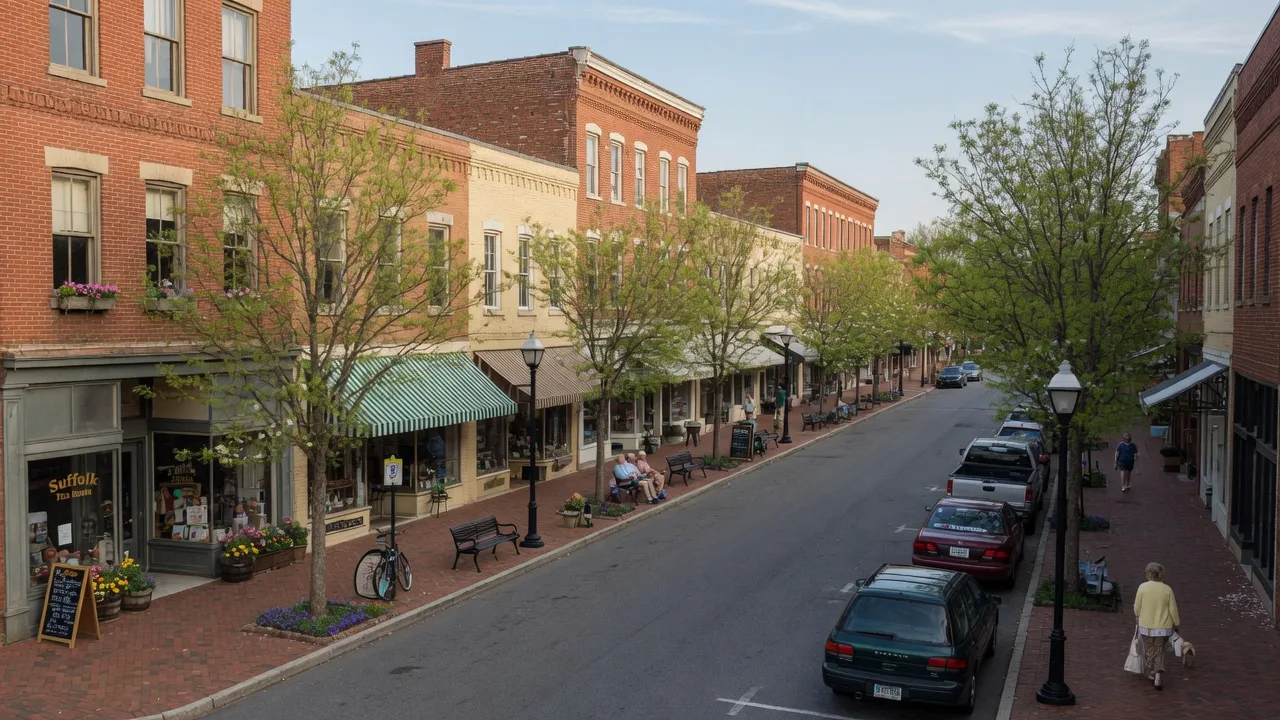
- A real small-town downtown: historic storefronts, restaurants, and the Nansemond River waterfront minutes away.
- Strong household incomes (about $92.7K median) with a cost of living right at the national average, per BestPlaces.
- A quieter market: 45 to 73 days on market means less bidding-war pressure than anywhere else in the region.
The Cons
- The longest commutes in the region: 30 to 45 minutes to Norfolk and 40-plus to the Oceanfront on a good day.
- Big-city amenities are a drive: shopping, dining, healthcare specialists, and nightlife all sit elsewhere.
- Growing pains: roads, schools, and utilities are playing catch-up as the new communities fill in.
- Resale inventory is thin outside North Suffolk; the rural south sells slowly and prices can sit.
- Waterfront and floodplain homes along the Nansemond and Chuckatuck carry flood insurance costs; check the zone before you fall in love.
Suffolk Neighborhoods: Finding Your Right Fit
The five areas I send most buyers to, with approximate price ranges from current market data. Ranges move with the market, so verify against live listings.
1 Downtown Suffolk
Approx. $275K–$400KHistoric storefronts, the Nansemond River, and a genuine small-town Main Street. What to know: the character pick, with older homes and walkability you cannot find in the new communities.
2 North Suffolk / Harbour View
Approx. $450K–$750KThe new-construction heart of the city: master-planned communities, marinas, and the closest Suffolk gets to Norfolk. What to know: the top pick for commuters who want a brand-new house.
3 Nansemond River
Approx. $400K–$550KRiverfront neighborhoods and newer developments along the Nansemond. What to know: boating access and water views at a fraction of Great Neck prices.
4 Chuckatuck
Approx. $410K–$480K+Rural charm with waterfront on Chuckatuck Creek and lots that stretch. What to know: the equestrian and acreage pick; waterfront estates run well above the median.
5 Driver
Approx. $535K–$550KA quiet agricultural community along Route 460 with strong land values. What to know: the country-life pick; expect to drive for everything except peace and quiet.
Neighborhood price ranges are approximate, drawn from Redfin neighborhood market data, Zillow home values, and local market reports (2025–2026). School assignments vary by address; verify a specific property's zone before you offer.
Schools
Suffolk Public Schools serves the city. Assignments are zone-based, and the city's long distances mean your school can be a real drive from your home, so confirm a specific address's school via the division's boundary look-up before you offer.
Programs & Honest Context
Suffolk Public Schools offers Advanced Placement, dual enrollment, and career and technical education pathways, and the division has been expanding as the city grows. Formally designated district-wide magnet programs are limited, so check with the division for current academy and choice options.
The honest note for buyers: the district is a solid, improving option rather than the region's headline performer, and families in new North Suffolk communities should verify which elementary school their neighborhood feeds before they buy.
The Buyer's Take
Run every candidate address through the Suffolk Public Schools boundary look-up, and compare the full regional picture in my school district guide and the full schools guide.
Commute Times
Driving times depend heavily on your exact neighborhood, the time of day, and tunnel traffic. Suffolk is the long-leg city of the region, so plan generously.
To Norfolk (downtown)
Approximately 30–40 minutes via US-58 or US-460 to I-664, corridor dependent.
To Chesapeake
Approximately 20–30 minutes via US-58 or I-64, corridor dependent.
To Naval Station Norfolk
Approximately 35–45 minutes, longer in morning rush.
To Virginia Beach
Approximately 40–55 minutes via I-64, corridor dependent.
Cost of Living
BestPlaces puts Suffolk at a cost-of-living index of 99.8, essentially right at the U.S. average of 100 and about 4% below the Virginia state average.
What That Means
Housing is the biggest factor, and Suffolk's median sits close to Chesapeake's while buying you more land and newer build. The quiet catch is transportation: long commutes mean real fuel and maintenance costs that no cost-of-living index captures.
Different indexes use different methods, so read any single number as a directional signal. Factor in the drive when you compare Suffolk to the rest of the region.
The Trade-Off
You trade commute time and amenity access for land, new construction, and a slower pace of life.
Buyers who work in Chesapeake, near the southern bases, or remotely, and who want a new home on real property, usually find the trade works. Buyers who need daily Norfolk or Virginia Beach access should look twice at the drive.
People Also Ask: Suffolk
The questions buyers actually Google before they call, answered straight.
Is Suffolk a good place to live?
What is the crime rate like in Suffolk?
Is Suffolk good for families, military, and retirees?
What is the commute to Norfolk and Chesapeake like?
What are the best neighborhoods in Suffolk?
How much house can I get for the median price in Suffolk?
Is a new-construction home in Suffolk a good investment?
Want the fuller picture? Read the housing guide, neighborhood breakdown, and commute details above, or just call and ask.
How Suffolk Compares to Other Hampton Roads Cities
Suffolk is the frontier of Hampton Roads: the fastest-growing city, the biggest by land area, and the slowest market at about 45 to 73 days on market. A median around $403K to $407K buys a 4-bedroom new home in North Suffolk or real acreage in the rural south.
You trade the region's longest commutes and a drive for big-city amenities in exchange for land, new construction, and a slower pace. Buyers who work in Chesapeake, near the southern bases, or remotely usually find the trade works.
The Compare List
- Price: a median close to Chesapeake's, buying more land and newer build.
- Pace: the slowest of the seven cities, with the least bidding-war pressure.
- Commute: the longest commutes in the region to Norfolk, the bases, and the Oceanfront.
- Lifestyle: real land, a small-town downtown, and a fast-growing new-home market.
Compare the Other City Guides
- Living in Virginia Beach
The coastal anchor: beach lifestyle, top schools, and a stronger military presence.
- Living in Chesapeake
Space, newer construction, and family value just east of the city.
- Living in Norfolk
The urban core: Naval Station Norfolk, downtown, and historic districts.
- Living in Portsmouth
History, waterfront, and the region's most affordable entry points.
- Living in Hampton
NASA, Langley, and waterfront value on the Peninsula.
- Living in Newport News
Shipbuilding, military, and strong value on the Peninsula.
Nearby Guides: The Rest of Hampton Roads
Every city in this region has a different personality. Compare them side by side.
Living in Virginia Beach
The coastal anchor: beach lifestyle, top schools, and a stronger military presence.
Living in Chesapeake
Space, newer construction, and family value just east of the city.
Living in Norfolk
The urban core: Naval Station Norfolk, downtown, and historic districts.
Living in Portsmouth
History, waterfront, and the region's most affordable entry points.
Living in Hampton
NASA, Langley, and waterfront value on the Peninsula.
Living in Newport News
Shipbuilding, military, and strong value on the Peninsula.

Let's Find Your Suffolk Home
I'm Terry TreXler: a Marine Corps Veteran, a second-generation agent, and a Hampton Roads native. I've been licensed since 2002 with 1,000+ transactions, and I know which Suffolk communities appreciate, which builders deliver, and which dirt is worth the money. I've got you, and we'll get you the best deal possible.
Sources & Review Date
Reviewed and updated October 1, 2026 by Terry TreXler. Market figures: Redfin Suffolk housing market data (median sale ~$403K, down ~5% YoY, days on market ~45–73, 2026), local market report (~$407K), and North Suffolk new-construction price bands. Demographics: U.S. Census Bureau QuickFacts and American Community Survey 5-year estimates. Cost of living: BestPlaces. Crime: FBI UCR data via HomeSnacks and NeighborhoodScout. Neighborhood ranges: Redfin, Zillow, and local market reports. School context: Suffolk Public Schools.